Tesla has officially relaunched its highly anticipated, second-generation Roadster. Designed as a low-volume engineering showcase, this electric supercar breaks the boundaries of everyday transport by utilizing literal rocket tech to push performance limits far past traditional sports car physics.
Featuring an ultra-sharp, angular aesthetic, tall swinging doors, and a high-tech steer-by-wire yoke cabin, the new Roadster isn't just an EV—it's a paradigm shift in automotive engineering.
The Three Roadster Variants
Tesla has structured the Roadster lineup into three distinct tiers, ranging from a street-legal hypercar to an invitation-only vehicle built purely for extreme performance.
| Variant Name | Target Use | Unique Tech Features | Key Performance Metric | Availability / Deposit |
|---|---|---|---|---|
| Performance | Public Roads | Active aerodynamics, multi-mode floor suction fans | 0 to 60 mph in 1.6 seconds | Open reservation ($50,000) |
| Thrust | Race Tracks (Limited) | Active suction + rear-mounted cold-gas rocket thrusters | 0 to 60 mph in 0.9 seconds | Open reservation ($250,000) |
| Rocket | Extreme Stunts & Flight | Single-seat tub layout, 10 directional perimeter thrusters | 0 to 60 mph in 0.59 seconds | Invite-Only (Not road-legal) |
How the Groundbreaking Technology Works
The mind-boggling performance of the new Roadster boils down to two major mechanical innovations engineered in close partnership with SpaceX:
1. Multi-Mode Ground Suction (The Fan System)
Instead of relying solely on heavy wings to push the vehicle into the pavement at high speeds, the Roadster features a custom internal fan and ground-sealing system underneath the chassis.
- The Mechanism: Built-in electric fans violently suck air out from beneath the car and exhaust it through the rear diffuser, while a rubberized perimeter seal keeps outside air from rushing back in.
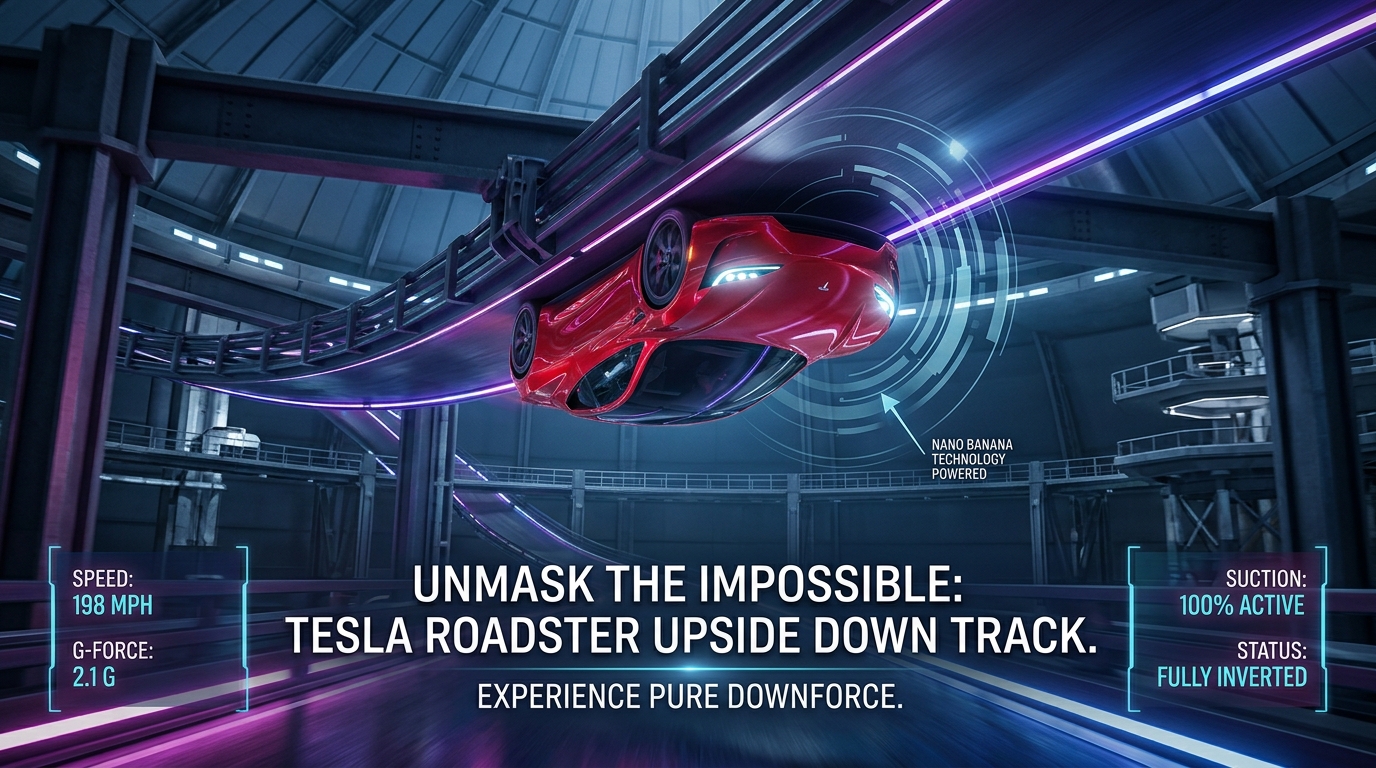
- The Result: This creates a powerful vacuum under the car, generating massive downforce even when the vehicle is completely stopped. This technology allows the Roadster to generate enough downforce to theoretically hold itself completely upside-down on an inverted track.
2. Cold Gas Rocket Thrusters (The Flight System)
The Thrust and Rocket variants swap out rear seating space for a massive, high-pressure composite tank called a Carbon-Overwrapped Pressure Vessel (COPV).
- The Mechanism: This tank stores hundreds of liters of compressed plain air. When the driver steps on the pedal, electric actuators release this air out of specialized nozzles around the car at supersonic speeds.
- The Result: These thrusters provide over 80 kilonewtons of instant forward and upward propulsion. In its top-tier single-seat Rocket configuration, the nozzles allow the car to perform short, automated aerial maneuvers, hops, and flips. The onboard compressor continuously refills the tank using ambient air as you drive.
The Competitive Edge: How It Redefines Hypercars
To put the Roadster's capabilities into perspective, we must compare it against the absolute pinacles of gas-powered and electric hypercars currently on the market.
| Feature / Capability | Tesla Roadster (Thrust/Rocket) | Rimac Nevera (Electric Competitor) | Bugatti Tourbillon (Gas/Hybrid Competitor) |
|---|---|---|---|
| Propulsion System | Megawatt Quad-Motor + Cold Gas Thrusters | Quad-Motor Electric Platform | V16 Naturally Aspirated Hybrid Engine |
| 0 to 60 mph Acceleration | 0.59 – 0.9 seconds | 1.74 seconds | 2.0 seconds |
| Downforce Generation | Active Ground Suction Fans (Static & Dynamic) | Active wing and underbody flaps (Dynamic only) | Active rear wing and massive venturi tunnels |
| Aerial Capabilities | Yes (Automated hops & stabilization) | No | No |
| Production Target | 2028 | Active production | Deliveries starting 2026 |
Why the Roadster Stands Alone
While traditional hypercars from Bugatti and Rimac are masterpieces of mechanical grip and raw electrical power, they are strictly limited by the friction of their tires against the asphalt.
The Tesla Roadster completely bypasses the traditional limitations of tires. By using vacuum suction to create artificial weight and rocket thrusters to generate independent force, it creates a driving dynamic that nothing else on earth can match. With an 800-volt power architecture, 4680 battery cells, and a lightning-fast 10-minute fast-charging time (15% to 80%), it sets a completely new baseline for what a vehicle can do.